
Web Design Blog
How a Professional Website Impacts Brand Perception and Business Growth
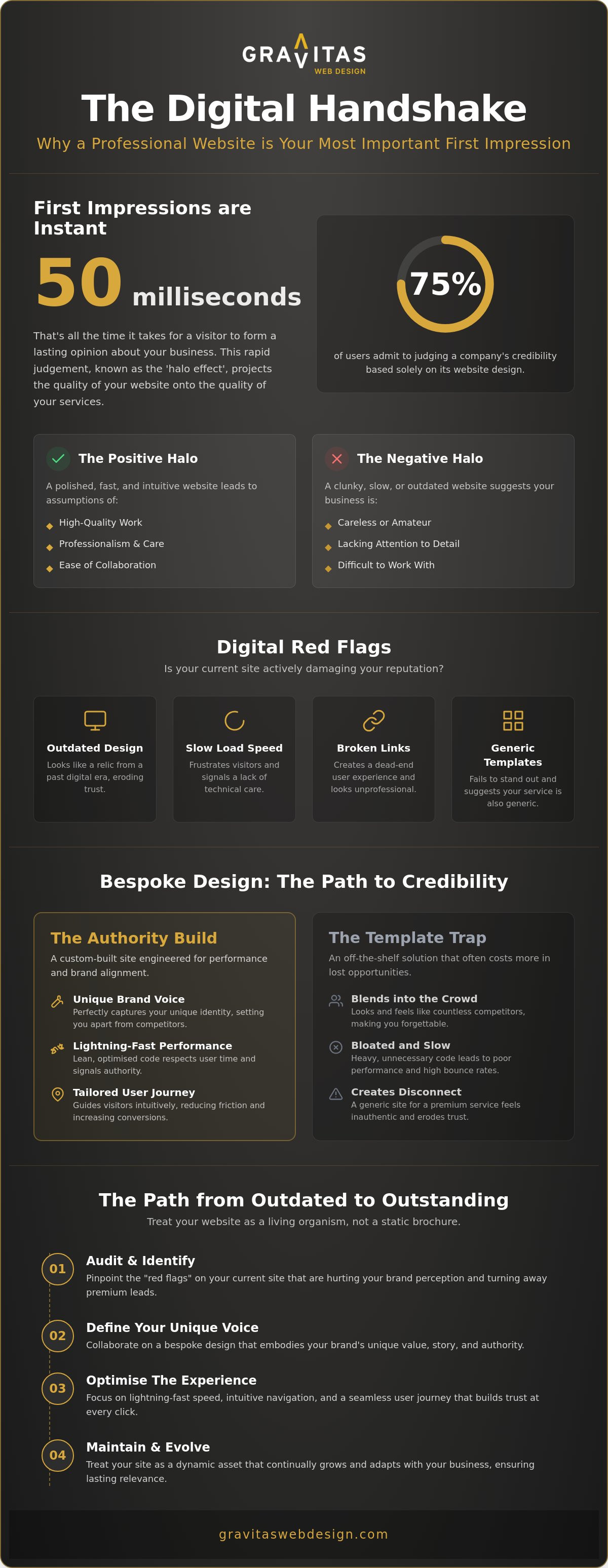
Imagine you’ve just finished a brilliant networking call, but as you hang up, you feel a sudden pang of anxiety. You know the person on the other end is about to click the link in your email signature, and you’re desperately hoping they don’t judge you by that clunky, outdated homepage. It’s a classic case of “website shame,” and it happens to the best of us. However, understanding how a professional website impacts brand perception is vital because first impressions are formed in just 50 milliseconds. According to research, 75% of users judge a company’s credibility based on its website design alone. If your site looks amateur, prospective clients will naturally assume your services are too.
It feels incredibly unfair when your actual work is top-tier but your digital presence suggests otherwise. You’re likely tired of seeing high bounce rates or attracting low-quality leads who constantly haggle on price whilst ignoring your true value. This article promises to show you how to transform your site into a “digital handshake” that commands respect and justifies premium pricing. We’ll look at why your current design might be pushing people away and the exact steps you can take to build a presence that radiates authority and professional pride.
Key Takeaways
- Master the “50-millisecond handshake” to ensure your first impression radiates credibility rather than causing a sudden bout of website shame.
- Discover how a professional website impacts brand perception by swapping generic templates for bespoke design that captures your unique brand voice.
- Learn to use the “silent language” of colour and layout to attract premium leads who respect your value instead of haggling over every penny.
- Identify the digital red flags that act like a “closed” sign on your shop front, from outdated copyright dates to broken links.
- Understand why treating your site as a living organism, and not a static brochure, is the secret to maintaining a high-end identity that justifies premium pricing.
The 50-Millisecond Handshake: How First Impressions Shape Brand Perception
Imagine walking into a high-end office in Birmingham’s Jewellery Quarter. You’d expect sleek lines, a warm greeting, and an immediate sense of order. Now, compare that to your current website. Does it feel like a firm, confident handshake or a limp, cold shoulder? Research suggests that users form a solid opinion about your business in just 50 milliseconds. That is less time than it takes to blink. In that tiny window, your digital presence is doing all the heavy lifting, and understanding how a professional website impacts brand perception is the difference between a fresh lead and a closed tab.
There is a psychological quirk called the “halo effect” at play here. When a visitor sees a site that is polished, fast, and easy to use, they subconsciously project those qualities onto your actual service. If your site is beautiful, they assume your work is beautiful. If it is intuitive, they assume you are easy to work with. On the flip side, a broken template or a cluttered layout acts as a digital warning sign. It suggests that if you cannot be bothered to fix your own front door, you probably won’t look after their business with much care either.
The Psychology of Instant Trust
A great site does not just look pretty; it organises information in a way that feels natural. By following established web design principles, a bespoke site uses visual hierarchy to guide the eye exactly where it needs to go. This reduces cognitive load, meaning your potential client does not have to work hard to find what they need. When things feel easy, trust follows. Brand perception is the sum of every digital interaction a person has with your business. If those interactions feel seamless, your perceived competence skyrockets before you have even said a word.
Why “Good Enough” is Killing Your Conversion Rate
Let’s talk about the “hobbyist” trap. You’re charging professional fees, but your site looks like a weekend project. This creates a massive disconnect that kills conversions. It’s the primary source of that nagging “website shame” many Birmingham business owners feel when they’re networking. You hesitate to share your URL because you’re worried about the “gut feeling” it leaves behind. A clunky interface or slow loading times signal a lack of attention to detail. If you want to justify premium pricing, your digital presence needs to look the part. There is no room for “good enough” when your reputation is on the line.
The Psychology of Credibility: Why Bespoke Design Outperforms Generic Templates
Have you ever browsed a few competitor sites and felt like you were looking at the exact same digital brochure over and over? That is the “Template Trap”. When you use an off-the-shelf layout, you aren’t just saving money; you’re blending into the background. If your site looks like everyone else’s, how can you expect clients to believe your service is one-of-a-kind? This is precisely how a professional website impacts brand perception; it either marks you as a pioneer or just another face in the crowd. Choosing a unique path tells the world you’ve arrived.
Bespoke engineering is about more than just “pretty” pixels. It is about building a digital engine that actually purrs. While templates often come with heavy, unnecessary code that slows everything down, a custom build is lean and lightning-fast. High-performance speed is a silent signal of authority. It says you value your visitor’s time and attention. Think of it as the difference between a high-end office suite in Mayfair and a pop-up tent in a car park. One suggests permanence and power; the other suggests you might be gone by Tuesday.
Customisation vs. Conformity
Choosing bespoke web design in Birmingham allows you to step out of the “uncanny valley” of web design. You know the feeling; a site looks okay, but something feels slightly generic and “off”. Users can sense when a brand hasn’t put thought into its own identity. For London property firms, as an example, a unique brand voice needs to resonate through every scroll. Tailoring the user journey to your specific clientele ensures that the site behaves exactly how they expect it to. Consistency and reliability are key, as noted in the U.S. Web Design System, which emphasises that earning trust starts with a reliable interface.
When to Make the Leap to Bespoke
Is it time to stop DIY-ing your digital presence? If you find yourself apologising for your site or if your business has outgrown its original “startup” look, the answer is probably yes. It is a transition from a short-term expense to a long-term brand asset. Here is a quick checklist to help you decide when to move from a template to a bespoke website:
- You feel a pang of “website shame” when sending a proposal to a big prospect.
- Your site takes more than three seconds to load, losing half your audience.
- You’re attracting low-quality leads who only care about the lowest price.
- Your competitors all look identical to you, and you’re losing your edge.
A bespoke site is a long-term investment that builds equity in your brand. If you are ready to stop blending in and start standing out, you might want to explore how a custom build could work for you.
Visual Cues and User Behaviour: Decoding the Silent Language of Design
Have you ever walked into a boutique hotel and instantly felt like you should lower your voice and stand a bit taller? That isn’t an accident. It is the environment talking to you without saying a word. Your website does the exact same thing through typography, colour, and layout. This silent dialogue is a massive part of how a professional website impacts brand perception. If your fonts are messy or your colours clash, you’re shouting at your visitors in a language that says “unreliable”.
Think of your navigation as a physical office centre. If a client walks in and cannot find the reception desk, they’ll feel awkward and leave. On your site, if the “Contact” button is buried under three layers of menus, that is friction. It is the digital equivalent of a rude receptionist who ignores you whilst they’re on the phone. Professional photography also plays a role here. Generic stock photos of people in suits high-fiving are transparently fake. Using real images of your team and your actual workspace builds an authentic bridge that stock images simply cannot cross.
The Power of Strategic Branding
Your website doesn’t exist in a vacuum. It is the anchor for your entire identity. A sharp professional logo design in London sets the tone for everything else. If your site doesn’t match your LinkedIn profile or the business card you handed over at lunch, you create “brand friction”. Consistency builds trust. Using colour strategically, like deep blues for a law firm’s stability or vibrant oranges for a startup’s energy, helps evoke the right emotional response before a single line of copy is read.
User Experience (UX) as a Trust Signal
We’ve all been there: trying to fill out a contact form on a phone only for the keyboard to cover the text box. It is infuriating. Responsive design isn’t just a technical “nice-to-have”; it is a mark of respect for your user’s time. A study on Brand Credibility Through Web Design confirms that usability is a core pillar of how people judge your business’s legitimacy. Then there’s white space. High-end brands aren’t afraid of “empty” room on a page. It provides breathing room and suggests you’re confident enough not to scream for attention. Amongst modern UK professionals, 63% of organic search traffic now comes from mobile devices. If your site feels clunky on a smartphone, you’re effectively telling more than half your audience that they don’t matter.
Red Flags and Reality Checks: Is Your Current Site Damaging Your Reputation?
Let’s be brutally honest for a moment. If your website footer still says “Copyright 2018,” you are telling every prospective client that you haven’t checked on your own business in years. It is a tiny detail, but it speaks volumes. It’s the digital equivalent of having a thick layer of dust on your office windows. When a high-value lead sees an outdated date or a “coming soon” page that has been there since last summer, they don’t just see a technical oversight; they see neglect. This is a prime example of how a professional website impacts brand perception; it proves you are active, attentive, and ready for work.
Broken links are another silent killer. Clicking a “Services” button only to land on a 404 error page feels like walking up to a shop front and finding a “closed” sign during business hours. It’s frustrating and unprofessional. Then there’s the issue of speed. Research shows that 53% of mobile users will abandon a website if it takes longer than three seconds to load. If your site is sluggish, you aren’t just “behind the times”; you are actively throwing away half of your potential enquiries before they even see what you do.
The “Enquiry Test”
You can diagnose your site’s health by looking at your user flow. If you’re wondering how to get more enquiries from my website, start with the “Mum Test”. Ask a non-technical friend or family member to find your specific service and contact you in under three clicks. If they struggle, your clients definitely will too. Take a cold, hard look at your top three Sutton Coldfield competitors. If their digital front doors look more inviting than yours, you’re losing ground every single day. A lack of clear calls-to-action (CTAs) makes it look like you don’t actually want the work.
Mobile Performance and Accessibility
We’ve all suffered through the “pinch-to-zoom” nightmare on an iPhone. If a visitor has to squint and slide their thumb across the screen just to read your phone number, they will leave. A site that “breaks” on mobile feels like an amateur operation, which is a disaster amongst modern UK professionals who do most of their research on the go. There is also the moral and legal side of things. Ensuring your site meets accessibility standards isn’t just about avoiding a “red flag”; it’s about making sure every potential client can interact with your brand. If you’re worried your current site is doing more harm than good, it might be time to book a professional audit and see where you stand.
Scaling Your Digital Authority: The Path from Outdated to Outstanding
Think of your website like a high-end car. You wouldn’t buy a Bentley and then never change the oil or wash the windows, would you? A professional website is a living organism, not a dusty brochure sitting in a drawer. To keep that “premium” feel we’ve discussed, you need high-performance hosting. It’s the difference between a smooth ride on the motorway and a bumpy track. This is another layer of how a professional website impacts brand perception; if the engine is purring and the pages load instantly, the client feels safe and valued from the very first click.
Regular updates and fresh content through Search Engine Optimisation (SEO) tell the world you’re active and thriving. Understanding how a professional website impacts brand perception means recognising that a static site is often a dying site in the eyes of a savvy consumer. If your last update was years ago, it looks like you’ve gone on a very long holiday. We act as your digital ally, handling the grease and gears of the tech whilst you focus on actually running your business. You shouldn’t have to worry about plugin updates or server uptimes; that’s our job.
Security as a Brand Promise
Nothing kills a “premium” vibe faster than a big red “Not Secure” warning in the browser bar. It’s the digital equivalent of a “Beware of the Dog” sign on a florist’s shop. A lack of SSL destroys trust in seconds. Investing in WordPress maintenance services in Lichfield is about protecting your professional name. The brand damage of a hacked site is far more expensive than the simple cost of prevention. It is about showing your clients that you take their data as seriously as you take your own reputation.
Your Digital Roadmap
The goal is to move from “just a website” to a lead-generation machine. This involves more than just layout; it’s about the words on the page. Professional copywriting ensures your brand voice is as sharp as your visuals. When your site finally aligns with your high-end identity, you’ll stop feeling that “website shame” and start feeling proud. It is about creating a digital space that does the selling for you before you even pick up the phone. Ready to fix the disconnect? Let’s have a straight-talking chat about your digital presence and get your brand back on track.
Ready to Turn Your Digital Handshake into a Power Play?
Your website isn’t just a digital placeholder; it’s your hardest-working salesperson. We’ve explored how a professional website impacts brand perception by looking at everything from that initial 50-millisecond glance to the silent authority of a secure, fast-loading page. If you’re still hiding behind an “okay” template or an outdated footer, you’re essentially leaving money on the table whilst letting your hard-earned reputation take an unnecessary hit.
You deserve a digital presence that feels as premium as the work you actually do. At Gravitas, we provide founder-led, straight-talking management that takes the technical weight off your shoulders. Whether you need bespoke branding and design for firms in London and Birmingham or secure hosting and maintenance, we handle the end-to-end details so you can get back to running your business. It’s time to stop settling for “good enough” and start aiming for outstanding.
Stop letting “website shame” hold you back from the big leads. Get a candid audit of your current website from Gravitas and let’s build a digital presence you’re actually proud to share. You’ve built a great business; it’s time your website finally caught up.
Frequently Asked Questions
Does a professional website really justify a higher price point?
Yes, because your digital presence is the primary way clients measure your value before they ever speak to you. If your site looks like a DIY project, prospective leads will naturally expect DIY prices. A high-end site justifies premium fees by providing visual proof of your competence. It’s about aligning your price tag with the perceived quality of your brand from the very first click.
How often should I update my website design to stay relevant?
You should aim for a significant design refresh every three to five years to keep up with changing user expectations. However, your site should be a living organism that you tweak and improve regularly. Technology moves fast, and a site that hasn’t been touched in years quickly starts to feel like a digital museum piece. Constant small improvements prevent the need for a panicked emergency rebuild later.
Can a template website ever look truly professional?
A template can look clean and tidy, but it will rarely look “premium” or unique to your business. Templates are built for the masses, which means they lack the specific brand voice needed to stand out. To understand how a professional website impacts brand perception, you have to look at the “uncanny valley” of generic designs. They feel off-the-shelf because they are, making your business look like a carbon copy of your competitors.
Is mobile responsiveness really that important for B2B brands?
Absolutely, because B2B buyers are still humans who use smartphones for research. Whether they’re checking your credentials on the train or during a quick lunch break, a site that breaks on an iPhone makes you look amateur. With 63% of organic search traffic now coming from mobile devices, ignoring this group is effectively closing your digital doors to more than half of your potential market.
How does website speed affect how people perceive my company?
Speed is a silent signal of how you likely handle your business operations. If your site is sluggish and frustrating, visitors subconsciously assume your service will be slow and outdated too. A fast-loading site shows respect for the user’s time and signals that you’re a modern, efficient firm. It’s the difference between a smooth, high-end office experience and a disorganised physical centre where nothing seems to work.
What is the single most important element of a professional website?
Trust is the most vital element, achieved through a mix of clear navigation and professional aesthetics. Your site needs to act as a “digital handshake” that immediately lowers the visitor’s guard and builds credibility. Without that initial spark of trust, even the best services in the world won’t get a second look. It’s about making the visitor feel they’ve landed in the right place within those first 50 milliseconds.
How can I tell if my current website is driving customers away?
Check your bounce rates in your analytics; if people are leaving your key pages within seconds, they’ve spotted a red flag. You can also run the “Mum Test” or ask a straight-talking partner for an honest critique. If you feel a twinge of “website shame” when sharing your link with a big prospect, that’s usually your gut telling you that your digital presence is damaging your reputation.
Do I need a professional copywriter if I can write my own content?
You might know your business inside out, but a professional copywriter knows how to sell it to a complete stranger. They ensure your brand voice matches your high-end visuals, creating a seamless and persuasive experience. Learning how a professional website impacts brand perception often involves realising that clunky, self-written text can undermine even the most beautiful design. It’s about finding the words that justify your premium pricing.